The Cotton Council of Malawi says the drop in the crop’s output this year is due to delays to give farmers farm inputs through the zero-deposit loan scheme.
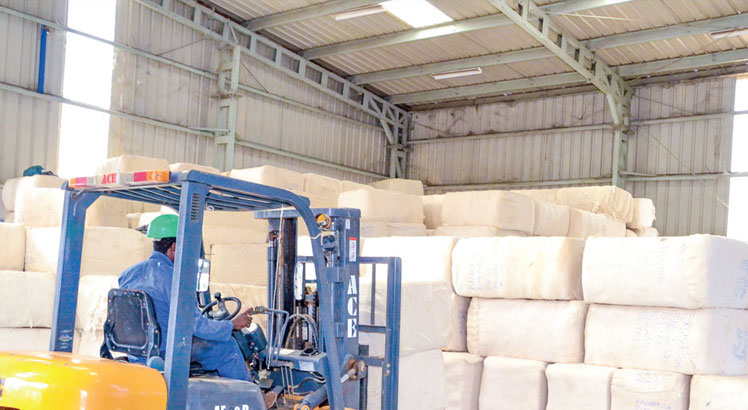
The council said this a week after the 2026 Marketing Cotton Season closed on August 23, with production recorded at 4 200 metric tonnes (MT), 80 percent below the initial production estimate of 22 800MT.
In an interview on Sunday, the council’s spokesperson Prisca Jamali said that due to low volumes of cotton, overall farmers’ income has also decreased to K6.3 billion from K7.8 billion last year, representing a 19 percent drop.
year. | Nation
“Traditionally, cotton farmers wait for zero-deposit loan facilities for them to cultivate the crop and this did not come in time,” she said.
Jamali said they are want timely seed distribution in the forthcoming season, adding that it is setting up a sustainable input mobilisation model with financiers.
Apart from challenges to access inputs, Malawi Cotton Company field manager Yohane Jim also attributed the low production levels to a reduction in the number of farmers who grew cotton this year, following frustrations from last season’s experiences.
“Production this year is low because out of the 26 000 farmers that grew cotton last season, only 7 000 have grown it this year,” he said.
Jim said this was partly because farmers were affected by technical challenges experienced in the Cotton Management Information System, a digital platform introduced by the council to modernise and track the country’s cotton market operations.
“The electronic payment system had some technical challenges that resulted in some farmers experiencing delays in getting their payments, while others did not receive them at all,” he said.
Cotton Farmers Association of Malawi president Labson Zidana described the season as mixed, observing that the buyers bought the crop at the government-set minimum price of K1 500 per kilogramme (kg).
He said: “In terms of marketing, the season has progressed well. On average, the prices were within the farm-gate price of K1 500 per kg, which is fair.
“We are far from the projected 22 800MT. It should be around 5 000MT.”
This year, two of the four regular cotton-buying companies, Malawi Cotton Company and Masapa Cotton Ginners, did not participate, citing low production levels that could not make commercial sense for their businesses.
In an earlier interview, longtime cotton commercial farmer Duncan Warren recalled that since 2010, when the Bingu wa Mutharika administration financed production and achieved an output of about 100 000MT, the country has only been producing around 10 000MT because of low investment.
He observed that, unlike other countries that have revamped the industry by subsidising genetically modified cotton seed, Malawi has turned a blind eye to the opportunity, leaving farmers reliant on local varieties that offer low yields.
During the opening of this year’s season on May 25, the Cotton Council of Malawi was optimistic that after producing around 10 000MT in 2025, production would hit 22 800MT in 2026 and 50 000MT in 2027 amid initiatives to revamp the sector.